

The tradition of bearing witness has roots far deeper than strategic theory — roots that run through slave preachers, through Bonhoeffer, through King. I wrote about that tradition on Sunday. Today we dig into the tactical and strategic logic.
In January 2026, the federal government deployed 3,000 armed agents to Minneapolis. They had body armor, unmarked vehicles, military-grade equipment, and the full backing of the executive branch. The commander they sent — Gregory Bovino — had the most aggressive use-of-force record in Border Patrol history, a 3.6:1 ratio of force incidents to reported assaults. DHS Secretary Kristi Noem had created a special position just for him: Commander-at-Large, untethered from geographic boundaries, reporting directly to her.
Minneapolis had cell phones.
Twenty-two days later, the commander was removed. Six weeks after that, the DHS Secretary who created his position was fired — the first Cabinet casualty of the administration’s second term. Multiple factors contributed to her ouster, but the through-line was bipartisan congressional fury over what the cell phones had recorded. The footage didn’t just embarrass the administration. It made the administration’s own allies unable to defend it.
A fighter pilot who died in 1997 could have predicted this outcome. A political philosopher who died in 1975 could have explained why.
The Fighter Pilot and the Philosopher
Colonel John Boyd (1927–1997) never wrote a book. He gave briefings — marathon sessions that could last six hours, scrawled on acetate slides, delivered to anyone who would listen. His ideas transformed American military strategy. The Marine Corps adopted his concepts as official doctrine. His framework shaped the planning for Desert Storm. One of the most respected strategic theorists of the late twentieth century ranked him among the outstanding general theorists of strategy.
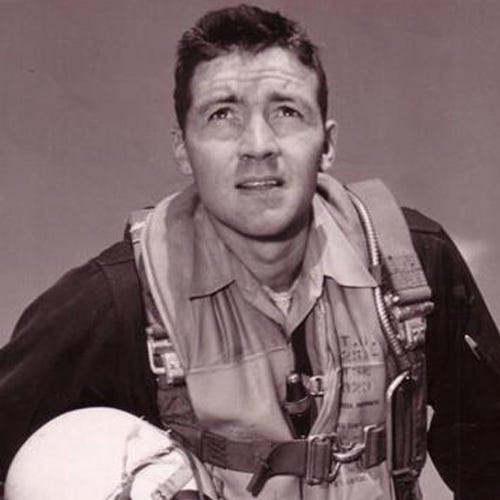
Boyd spent a career destroying and rebuilding his own frameworks, each time at a higher level of abstraction. He started as a fighter pilot — “Forty-Second Boyd,” who could defeat any opponent in simulated air combat in under forty seconds. He moved from tactics to aeronautical engineering, from engineering to epistemology, from epistemology to military strategy, from strategy to grand strategy. Each phase demolished the previous one and built something more general from the wreckage.
What he converged on was a single insight: whoever controls orientation controls the conflict.
His framework has been challenged — most rigorously by Stephen Robinson, who demonstrated that some of Boyd’s historical cases relied on compromised sources. But the framework’s predictive power across domains survives the historiographic critiques. What Boyd got right wasn’t the history. It was the theory of how groups succeed and fail under pressure.
Hannah Arendt (1906–1975) never read Boyd. She didn’t need to. Working from political philosophy rather than aerial combat, she arrived at a parallel insight about the relationship between collective action and force — one that resolves a problem in Boyd’s framework that Boyd himself never solved.
Together, they explain Minneapolis.
Orientation: The Layer Where the War Happens
Boyd is famous for the OODA loop — Observe, Orient, Decide, Act. Most people get it wrong.
The common reading is that OODA is about speed. Cycle faster than your opponent and you win. This is a misreading so total it reverses Boyd’s actual point.
Boyd’s central concept isn’t the loop. It’s orientation — the second step, what he called “the Big O,” the schwerpunkt of his entire body of work. Orientation is the lens through which an entity interprets the world: the inherited cultural traditions, previous experience, incoming information, and processes of analysis and synthesis that together determine what you see when you look at something.
The key insight is this: orientation doesn’t just process information. It determines what registers as information in the first place.
An organization with captured orientation — a mental model of reality that systematically filters out disconfirming evidence — will misread every situation, because the filter operates before conscious reasoning begins. Speed doesn’t help. A faster cycle built on a wrong orientation just produces rapid, confident failure.
This is why “just show them the facts” doesn’t work. A corrupted orientation layer eats the facts. The facts never reach the place where they’d do any good, because the filter that decides what counts as a fact has already excluded them.
Three Levels of Conflict
Boyd described conflict as operating simultaneously on three levels: physical, mental, and moral — in ascending order of importance.
Physical conflict is what most people think warfare is about. Troops, weapons, territory, arrests. The visible stuff. The metrics you can count.
Mental conflict targets the adversary’s capacity to orient, decide, and act coherently. Create confusion, ambiguity, surprise. Overwhelm their decision-making. This is OODA in its tactical application — not cycling faster, but ensuring that every time your adversary tries to make sense of the situation, their picture of reality doesn’t match reality.
Moral conflict operates at the deepest level. It targets the shared orientation that holds a coalition together — the bonds of trust, legitimacy, and common purpose that make collective action possible. It is the most decisive level, because physical and mental capacity are meaningless without the will and cohesion to use them.
But Boyd’s terminology fails him here. He calls the deepest level “moral” and then has to explain, every time, that he doesn’t mean ethics — not good versus bad. He means “the cultural codes of conduct or standards of behavior that constrain, as well as sustain and focus, our emotional/intellectual responses.” What he’s reaching for is a concept that already existed. He just didn’t know its name.
What Arendt Knew
Hannah Arendt drew a distinction that Boyd needed but never found.
Power, in Arendt’s framework, is not something you possess. It is something that exists only when people act in concert. It emerges from collective action and vanishes the instant the group disperses or fragments. It cannot be stored. It cannot be hoarded. It cannot be wielded by a single individual. Power belongs to the group and only to the group.
Violence is its opposite — not a greater degree of power but a substitute for it. You resort to violence precisely when power has failed, when the capacity for collective action has collapsed. Violence can destroy but it cannot create. It can compel but it cannot inspire. An army that holds together through shared purpose has power. An army that holds together only through the threat of punishment has violence. The first can adapt, improvise, coordinate without orders. The second can only do what it’s told.
Map this onto Boyd: the moral layer isn’t ranked “above” the physical layer on some abstract scale of importance. It’s a fundamentally different kind of thing. Physical force is what an individual actor deploys. Moral cohesion — power — is what a group generates through shared orientation and shared action. They’re not competing on the same axis. One is individual capacity. The other is collective capacity. And the collective capacity is what determines whether the physical capacity matters, because a force that can’t act in concert is just a crowd with weapons.
This is why Boyd’s hierarchy holds: a higher level trumps a lower level, not because the moral is “more powerful” than the physical, but because collective capacity is the precondition for effective individual action. Without shared orientation — without the ability to trust each other, read the same situation, act together without constant explicit direction — physical superiority becomes incoherent. You can have the most agents, the best equipment, the full backing of the executive branch. If your coalition is fragmenting, none of it matters.
Napoleon said: “The moral is to the physical as three is to one.” Boyd loved the quote. The ratio doesn’t matter. The asymmetry matters. And it matters because power and violence are different in kind, not in degree.
Witness and False Witness
Here is where Boyd and Arendt converge on something neither of them quite said.
Boyd argued that moral conflict requires “a unifying vision or grand ideal to motivate its own people, attract allies, and undermine the moral cohesion of an adversary.” He said the grand ideal has to “match observable reality.” But he never explained how that matching happens. He treats it as if reality is self-evident — as if the truth is just out there, available, and all you have to do is point at it.
But reality doesn’t testify on its own behalf.
Camera footage sitting on a server is inert. A fact in a database is inert. Truth as a proposition — as data, as information — can be drowned, contested, reframed, ignored. A corrupted orientation layer is designed to filter out correct information. That’s what fifty years of captured think tanks and captured media and captured regulatory agencies were built to do — ensure that accurate information about what is actually happening never reaches the place where it would force a reckoning.
You cannot fix a captured orientation by injecting better facts into it. The orientation eats the facts.
Witness is categorically different from information.
A witness is not a data point. A witness is a person in relation to what they saw — embodied, located, present, staking their credibility on testimony. Witness is relational: it requires someone who was there, someone who hears, and the shared space between them. It is Arendt’s space of appearance — people appearing to each other and, in appearing, constituting the shared reality that makes collective action possible.
And lies are also human acts.
The press conference where an official looks into a camera and says “domestic terrorist who weaponized her vehicle” — when video shows the steering wheel turned away and her last words were “That’s fine, dude. I’m not mad at you” — that’s not misinformation. That’s not bad data. That is a person performing an act of orientation: using institutional authority to construct a shared reality for their coalition. That is false witness. The lie holds not because it’s believable but because the person telling it has the authority to define what the coalition sees.
The conflict, then, is not truth versus falsehood. It is not even information warfare — competing narratives, dueling frames, propaganda against propaganda. The conflict is witness against false witness. Testimony against testimony. People who stand behind what happened against people who stand behind a fabrication of what happened. Both are human acts. Both require presence. Both require someone willing to be the one who says it.
The antidote to darkness is light. The antidote to lies is not the truth. It is those who bear witness to the truth.
False witness is inherently fragile. It requires continuous maintenance. Every new piece of evidence must be processed, reframed, suppressed, or denied — and each of those is another human act that must be performed by someone willing to perform it. The coalition of false witnesses must keep choosing, moment by moment, to sustain the fabrication. Each moment is an opportunity for someone’s orientation to crack. Each crack widens the gap between what they claim and what they can see with their own eyes.
True witness is inherently resilient. Each new piece of evidence confirms the testimony rather than threatening it. The coalition of witnesses doesn’t need to manage the narrative because the narrative manages itself — it matches what anyone can see. That’s what Boyd called harmony: shared understanding that enables implicit coordination, the ability to act together without constant explicit direction, because the frame is trustworthy and everyone who shares it knows what to do.
This is why harmony beats hierarchy. The hierarchy must constantly issue new instructions to maintain the lie. The harmonized coalition just keeps pointing cameras at what’s happening.
The Progression
Boyd described the collapse of moral cohesion as a deterministic progression — a causal chain where each psychological state produces the next:
Uncertainty → Doubt → Mistrust → Confusion → Disorder → Fear → Panic → Chaos.
That’s not poetry. It’s a causal chain. And each stage is a stage of orientation collapse — the progressive inability to construct a coherent picture of reality.
Uncertainty: the official frame doesn’t perfectly fit observable reality. Members of the coalition notice discrepancies but haven’t yet formed conclusions. This is where every organization lives, all the time. Uncertainty is normal. A healthy orientation absorbs it.
Doubt: repeated mismatch produces active questioning. The frame is no longer automatically trusted. People start checking. This is where the cost of false witness begins to bite — each new discrepancy forces the coalition to manufacture another explanation, and the explanations start to strain.
Mistrust: doubt extends from the narrative to the people and institutions maintaining the narrative. Not just “the story is wrong” but “the people telling us this are lying to us.” This is the critical transition — the point where orientation damage becomes relational, where the bonds between coalition members begin to fray.
Past mistrust, the cascade accelerates under its own weight. Confusion, disorder, fear, panic, chaos — each stage deepens the disorientation, each failed attempt to restore coherence confirms that coherence is gone. The distinctions between stages matter less than the momentum: once mistrust takes hold, the coalition’s ability to coordinate degrades faster than it can be repaired.
The progression can be weaponized: inject uncertainty, accelerate the chain, fragment the coalition. Microsoft understood this when it deployed FUD — Fear, Uncertainty, and Doubt — against Linux. FUD is not a rhetorical tactic. It is a moral-level weapon: it targets the bonds of trust that hold a coalition together, pushing members from uncertainty toward doubt toward mistrust, preventing them from reaching the shared confidence that would make the FUD irrelevant.
And FUD can be defended against: maintain harmony and a grand ideal that holds the coalition at uncertainty. Open source had “free as in freedom” — a frame that held because it matched what developers could see with their own eyes. Microsoft couldn’t create sustained mismatch because the truth was verifiable. The FUD couldn’t dissolve what it couldn’t disorient.
If you fought those wars, Minneapolis is recognition, not revelation. The dynamics are the same. Boyd explains why.
But the key insight is what drives the progression. Each stage represents the cost of false witness becoming harder to bear. Each discrepancy forces someone in the coalition to either recommit to the fabrication or break. Uncertainty is “I noticed something.” Doubt is “I can’t ignore it.” Mistrust is “They’re asking me to lie.” And the conversions — the Maria Bartiromos, the Chris Madels, the sixty CEOs — are the moments when specific human beings reach the point where the act of false witness costs more than the act of breaking.
The progression runs inside the coalition of people actively maintaining the lie. Documentation accelerates it by ensuring that the discrepancies are continuous, visible, and undeniable — by sustaining witness so consistently that the false witnesses can never rest.
Mismatch: Why Documentation is a Weapon
Boyd emphasized one word above all: mismatch.
The goal is to create constant mismatch between what your adversary’s orientation predicts and what actually happens. Between what they claim and what is observable. Between their mental model and the world.
When mismatch is sustained, the adversary cannot orient. They cannot decide coherently because their picture of reality doesn’t match reality. They overreact and underreact simultaneously — lashing out at phantoms while missing actual threats.
Boyd was explicit that this isn’t about speed: “All I have to do is be faster than my adversary. I can be slow as long as I slow his down even more. So it just doesn’t have to be speed. It can be ambiguity, deception, many other things you can do.”
Citizen documentation is a mismatch weapon — not because it produces competing narratives, but because it produces witness that the adversary’s orientation cannot process. When every official claim is immediately contradicted by six camera angles, the adversary’s orientation collapses in real time. Press conferences become outdated before they start. Official narratives fail before they circulate.
But — and this is the crucial distinction — the footage is not what does the work. The people behind the footage do the work. The cameras without the witnesses are surveillance. Surveillance is information extraction — data collected by an apparatus for its own purposes, controlled, releasable at the apparatus’s discretion, framed by institutional narrative. Body cameras are surveillance. Cell phone footage is witness. The difference is that surveillance serves whoever controls the apparatus. Witness serves the shared orientation. Witness is uncontrolled, immediate, and framed by presence rather than authority.
Documentation-as-witness breaks a captured orientation not by producing better information but by making the act of false witness visible as an act. When the footage contradicts the spokesperson in real time, what’s exposed isn’t just a factual error. It’s a person, on camera, choosing to lie. That exposure is what makes the next person in the coalition hesitate before performing the same act.
Vietnam: The Lesson
Boyd watched Vietnam closely. He saw something most American strategists missed.
The United States had overwhelming physical superiority: more troops, better weapons, superior technology, control of the air. America won nearly every tactical engagement. By body count metrics, the war was a crushing success.
But the United States lost the moral level — decisively. And the moment the loss became irreversible was not a military event. It was an orientation event.
The Tet Offensive in 1968 was a tactical defeat for North Vietnam. But it was the purest demonstration of mismatch in modern warfare. For years, the official orientation — “we’re winning, the metrics prove it” — had been maintained by institutional authority: generals at press conferences, Pentagon briefings, a president assuring the public. The coalition of false witnesses was large, credentialed, and confident.
Tet shattered that orientation in a single night. Simultaneous attacks across South Vietnam falsified the official frame instantly and on camera. The gap between what the government had been saying and what Americans could see on their television screens became too large to process within the existing orientation. The frame didn’t bend. It broke.
And once broken, it could not be rebuilt. Every subsequent piece of information was processed without a trusted frame. The war continued for seven more years, but it was already lost — because the coalition of false witnesses had been exposed as false witnesses, and no one could perform the act of official reassurance with a straight face anymore.
The American public didn’t get better information after Tet. They got witness — footage and reporting that couldn’t be processed by the official orientation, that forced reorientation on millions of people simultaneously.
Moral Isolation: How Coalitions Collapse
Boyd’s ultimate strategic aim wasn’t defeating enemies through force. It was isolation.
“Morally-mentally-physically isolate adversaries from their allies and outside support as well as isolate them from one another, in order to magnify their internal friction, produce paralysis, bring about their collapse.”
Moral isolation is what happens when the progression runs to completion. The coalition’s internal bonds dissolve. Allies defect. Outside support evaporates. The group ceases to function as a group — which means, in Arendt’s terms, it loses power. What remains is violence, and violence alone cannot sustain a political project.
The mechanism is compounding. Each defection makes the next one easier. Each public break signals that breaking is possible. The person who defects first pays the highest cost. The person who defects tenth barely has to explain. The progression runs faster as isolation deepens, because each act of breaking provides permission — visible evidence that the coalition of false witness is not unanimous, that the act can be refused.
This is why the conversions are the story. Not because individual defections change policy. Because each conversion is a crack in the orientation layer that makes the next crack possible — and the conversions that matter most are not from the opposition. They’re from inside the coalition: the Fox host who pushes back, the Republican attorney who breaks, the corporate executives who call for restraint. Natural allies whose defections trace the exact pattern Boyd described: isolation from allies and outside support, magnified internal friction, progressive collapse.
Every conversion is a person who could no longer perform the act of false witness. Every conversion makes the next act of false witness harder for everyone still performing it.
Coming in Part 2
Part 2 is the battle report. It shows the framework in action: how the administration’s captured orientation produced the same lies and the same failures from the first day of Operation Metro Surge through the commander’s removal. How Minneapolis built an infrastructure of witness that created continuous mismatch faster than the administration could fabricate. How the conversions — from a Republican gubernatorial candidate to a Fox News host to sixty corporate CEOs — prove that moral isolation ran from the field commander all the way to the Cabinet. Why violence would hand the administration victory. And what comes next.
If you fought the FUD wars, you’ll recognize the pattern. If you’ve read Boyd or Arendt, you’ll recognize the framework playing out in real time.
Minneapolis is proving that what worked against FUD works against a far more dangerous adversary. Not because truth is more powerful than lies. But because people who bear witness are more powerful than people who bear false witness — and that asymmetry holds whether the battlefield is a server room or a city street.
The moral battlefield is where this war will be won or lost. Part 2 is the battle report.
The Moral Battlefield — Sources
John Boyd: Primary Sources
Boyd, John R. “Patterns of Conflict.” Briefing, December 1986. Edited by Chet Richards and Chuck Spinney. Available at Colonel John Boyd Digital Archive and Project White Horse.
Boyd, John R. A Discourse on Winning and Losing. Edited by Grant T. Hammond. Colonel John Boyd Digital Archive. Transcript of lectures available at Squarespace archive.
John Boyd: Secondary Sources and Analysis
Coram, Robert. Boyd: The Fighter Pilot Who Changed the Art of War. New York: Little, Brown and Company, 2002. Amazon.
Osinga, Frans P.B. Science, Strategy and War: The Strategic Theory of John Boyd. London: Routledge, 2007. The most rigorous academic treatment of Boyd’s strategic theory.
Robinson, Stephen. The Blind Strategist: John Boyd and the American Art of War. Dunedin: Exisle Publishing, 2021. Amazon. Argues Boyd’s historical cases relied on fabricated Wehrmacht accounts. Reviewed at The Strategy Bridge and Wavell Room.
Price, Sterling. “Colonel John Boyd’s Thoughts on Disruption: A Useful Effects Spiral from Uncertainty to Chaos.” Journal of Advanced Military Studies 14, no. 1 (Spring 2023). Marine Corps University Press.
“The ‘Grand Ideal’: John Boyd and America’s Strategic Vision.” Marine Corps Gazette. Marine Corps Association. Also available at Academia.edu.
Marine Corps Doctrine
United States Marine Corps. MCDP-1: Warfighting. Originally published as FMFM-1 (1989), revised 1997. Marines.mil. Official doctrinal publication incorporating Boyd’s maneuver warfare concepts.
Library of the Marine Corps. “Warfighting: History of the MCDP, Roots of Maneuver Warfare, and the Doctrine in Action.” Research guide. Marine Corps University.
Hannah Arendt: Primary Sources
Arendt, Hannah. On Violence. New York: Harcourt, 1970. Contains the distinction between power and violence central to Part 1.
Arendt, Hannah. The Human Condition. Chicago: University of Chicago Press, 1958. Develops the concept of power as collective action and the “space of appearance.”
Arendt, Hannah. “Reflections on Violence.” The New York Review of Books, February 27, 1969. NYRB. Early formulation of the arguments later developed in On Violence.
Hannah Arendt: Secondary Sources
“Power, Violence, & Political Action.” Hannah Arendt Center, Bard College. HAC.
Lee, Steven. “Violence and Power in the Thought of Hannah Arendt.” Indiana University Department of Political Science, 2024. Indiana University.
Nonviolent Resistance
Chenoweth, Erica, and Maria J. Stephan. Why Civil Resistance Works: The Strategic Logic of Nonviolent Conflict. New York: Columbia University Press, 2011. Columbia UP. Study of 323 violent and nonviolent campaigns (1900–2006); found nonviolent campaigns succeeded 53% vs. 26% for violent campaigns. Harvard Kennedy School overview.
Napoleon Attribution
“In war, the moral is to the physical as three is to one.” Widely attributed to Napoleon Bonaparte. No definitive primary source identified; the quote appears in numerous military histories and is cited by Boyd in Patterns of Conflict.
Boyd Biographical
“John Boyd (military strategist).” Wikipedia. Wikipedia. Born January 23, 1927; died March 9, 1997.
Arendt Biographical
“Hannah Arendt.” Stanford Encyclopedia of Philosophy. Stanford. Born October 14, 1906; died December 4, 1975.
“Hannah Arendt.” Internet Encyclopedia of Philosophy. IEP.
So a lie relies on people willing to keep telling it, and every person who stops makes it harder for everyone who is still lying. Hope people continue to wake up!
Very helpful framework. Thank you for your work!