

The Two Sermons
“During the days of slavery,” Nancy Ambrose told her grandson, “the master’s minister would occasionally hold services for the slaves. He always used as his text something from Paul: ‘Slaves, be obedient to your masters.’”
After the minister left, the slaves would gather in secret for their own service.
“When he was gone, the slave preacher would get up slowly and say, ‘You are not slaves. You are God’s children.’”
Two sermons. The same Sunday. The same plantation.
Her grandson was Howard Thurman. He spent his life in the space between those two sermons — developing a theology that sided with “those who stand with their backs against the wall.”
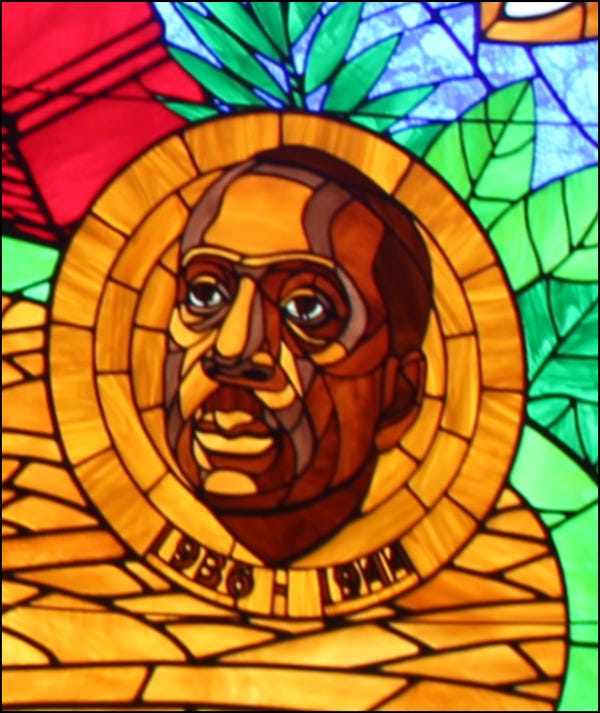
I grew up between these two sermons.
Huron Hills Baptist Church in Michigan, tried to hold both. The congregation fought openly over the Equal Rights Amendment. They quoted King from the pulpit while some members called him a communist radical. It was a church at war with itself — and to its credit, it still is.
After Charlottesville, I wrote a post naming the two Americas — the one founded on democracy and the one that celebrates the defenders of slavery. A co-leader of a small group I once led at church responded by calling Robert E. Lee “an honorable and godly man and abolitionist” and the Civil War “an illegal federal invasion.” The two sermons collided in my own living room, delivered by someone I studied scripture with every week.
Frederick Douglass drew the line in 1845:
“Between the Christianity of this land, and the Christianity of Christ, I recognize the widest possible difference.”
He was not arguing against Christianity. He was arguing that there were two of them. There have always been two of them. And the saddest thing — the thing that keeps me up at night, the thing that brought me to this page — is watching people who put the Sermon on the Mount in my mouth and the story of the Good Samaritan in my heart now talking about the sin of empathy.
The Whitewashed Tomb
Jesus didn’t organize an armed revolt against Rome.
He had every opportunity. The Zealots were recruiting. The crowds were ready — they’d tried to make him king by force after the feeding of the five thousand. Armed resistance was the expected path.
Instead, he walked into the Temple and started naming things.
“Woe to you, scribes and Pharisees, hypocrites! You are like whitewashed tombs, which look beautiful on the outside but on the inside are full of the bones of the dead and everything unclean.”
This is what got him killed. Not armed rebellion — Rome could handle that. What Rome and its religious collaborators could not handle was exposure. The public naming of what everyone could see but no one was supposed to say: that the religious authorities had made their peace with empire, and that peace was purchased with the bones of the dead.
The crucifixion was a collaboration. Rome had the soldiers, the crosses, the authority to execute. But Rome didn’t care about Jewish religious disputes. Pilate washed his hands. The Sanhedrin had the legitimacy — the religious authority, the appearance of righteousness, the whitewashed exterior. But they didn’t have the power to kill.
The arrangement worked because it stayed hidden. Rome provided the violence. The religious authorities provided the justification. And both maintained plausible deniability.
Jesus named the arrangement. He called the Pharisees children of those who murdered the prophets. He said the Temple had become a den of robbers. He made the collaboration visible.
The Sanhedrin didn’t hand Jesus to Pilate because he threatened military insurrection. They handed him over because he threatened something far more dangerous: the revelation of what they actually were.
His crime was exposure.
Where Bonhoeffer Learned It
Dietrich Bonhoeffer watched the German church bless Adolf Hitler, and he recognized the pattern.

The arrangement was the same. The Nazi state had the power — the SS, the camps, the machinery of death. But it needed legitimacy. The German Christians provided it, wrapping the swastika in the language of faith, blessing the regime from pulpits across the nation.
Bonhoeffer called it “cheap grace” — the preaching of forgiveness without repentance, baptism without discipline, the cross replaced by the swastika, and no one required to carry either.
But Bonhoeffer didn’t arrive at this theology alone. He learned it — from a community that had been practicing it under mortal threat for centuries.
In 1930, the twenty-four-year-old German theologian arrived at Union Theological Seminary in New York on a fellowship. He expected to learn from American academic theology. He found it mostly hollow.
What changed him was Harlem.
Adam Clayton Powell Sr. was pastoring Abyssinian Baptist Church — one of the largest and most politically active Black congregations in the country. Bonhoeffer went every Sunday. He went to the prayer meetings. He taught Sunday school. He sat with the choir and listened to the spirituals.
He later called it the most important religious experience of his time in America.
What he found at Abyssinian was not academic theology. It was a community that had been living inside the theology of exposure for generations. A community that had been naming the whitewashed tomb of American Christianity for as long as there had been an American Christianity to name. The spirituals were not just music. They were a coded practice of making the hidden visible, of preserving testimony under conditions designed to eliminate witnesses.
The tradition that Nancy Ambrose carried — “you are not slaves, you are God’s children” — was the same tradition Bonhoeffer encountered two generations later in a Harlem church. The slave preachers had developed, out of necessity, the entire theological toolkit that Bonhoeffer would later deploy against the Third Reich.
He brought recordings of the spirituals back to Germany. He played them for his students at the underground seminary at Finkenwalde. The songs that had sustained a community under American racial terror became part of the formation of the Confessing Church’s resistance to Nazi terror.
This is not a coincidence. This is not three great figures who independently discovered the same insight.
This is a tradition — forged in the hold of slave ships and the fields of the South, carried through the great migration and into the pulpits of Harlem, transmitted to a young German pastor who recognized it for what it was, and carried back across the Atlantic to face a different empire with the same God.
Bonhoeffer’s resistance was primarily exposure. He wrote. He spoke. He named what the German church was doing. The Cost of Discipleship was not just theology — it was a public indictment, a stripping away of the whitewash to reveal the bones beneath.
The Nazis could handle armed resistance. They had the Wehrmacht. They had the Gestapo. They had overwhelming force. What they could not handle was a pastor who had learned from a Harlem choir that the truth, spoken plainly and without flinching, is the one thing empire cannot survive.
“If we refuse to take up our cross and submit to suffering and rejection at the hands of men, we forfeit our fellowship with Christ and have ceased to follow him.”
Bonhoeffer was hanged at Flossenbürg on April 9, 1945, three weeks before the camp was liberated.
His crime was exposure.
King’s Method
Martin Luther King Jr. did not need to learn the tradition from Bonhoeffer. He was born inside it.
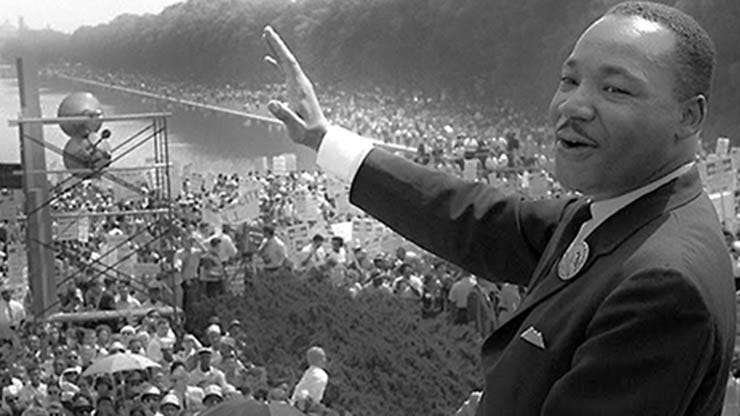
He grew up in the church that had been practicing the theology of exposure since before there was a word for it. Howard Thurman’s Jesus and the Disinherited was in his hands during the Montgomery bus boycott. The spirituals that Bonhoeffer carried back to Germany had never stopped being sung in the churches where King first heard the gospel.
What King added was a strategic understanding of exposure as method.
From Birmingham Jail, he named the pattern he had inherited:
“I have almost reached the regrettable conclusion that the Negro’s great stumbling block in his stride toward freedom is not the White Citizen’s Counciler or the Ku Klux Klanner, but the white moderate, who is more devoted to ‘order’ than to justice; who prefers a negative peace which is the absence of tension to a positive peace which is the presence of justice.”
The white moderate church was the American Sanhedrin — providing religious legitimacy for a system built on Black suffering, offering cheap grace to a nation that had never repented.
And then King named the method:
“Nonviolent direct action seeks to create such a crisis and foster such a tension that a community which has constantly refused to negotiate is forced to confront the issue. It seeks so to dramatize the issue that it can no longer be ignored.”
The sit-ins. The marches. The children’s crusade in Birmingham. All designed to crack open the tomb. Bull Connor’s dogs and fire hoses did more for civil rights than any argument, because they revealed what had always been true.
The violence was not new. Black Americans had been living under it for centuries. What was new was that white America had to see it — on the evening news, in their living rooms, undeniable.
King understood what the slave preachers had understood, what Bonhoeffer learned in Harlem, what Jesus demonstrated in the Temple: the arrangement between power and its religious collaborators cannot survive exposure. It depends on the bones staying hidden inside the tomb. The moment someone strips the pretense — the moment the bones are visible — the arrangement begins to collapse.
King was assassinated in Memphis on April 4, 1968.
His crime was exposure.
It Worked
Here is what the fear wants you to forget: it worked.
Not the way power works — not by force, not by conquest, not by building something larger than what it opposed. It worked the way Jesus said it would work. It stripped away the whitewash. It revealed the corruption, the rot, the dead men’s bones.
That is what exposure purchases. Not the fall of the empire. The fall of the lie.
The slave preachers built a theology under conditions more brutal than anything Americans face today. They were owned. Their families could be sold. They could be beaten to death for learning to read. And they built, in secret, under mortal threat, a counter-testimony so powerful that the Christianity of slaveholders never recovered from it. The institution survived for generations after the first slave preacher stood up and said you are not slaves, you are God’s children. But its authority to call itself Christian did not. Slavery could continue by force, but it could no longer continue by blessing. And a system that requires the blessing to justify the force is a system that has already begun to die.
Bonhoeffer was hanged. But before he was hanged, he named what the German Christians were. He stripped the swastika out of the cross and held them up separately and said these are not the same thing, and you know it. The Reich survived him by three weeks. But that is not why it worked. It worked because no one ever re-whitewashed that tomb. The German Christians who blessed Hitler are remembered as what Bonhoeffer said they were. Eighty years later, the bones are still visible. The lie did not recover.
King was assassinated. But before he was assassinated, Birmingham happened. The dogs and the fire hoses were not new — Black Americans had been living under that violence for centuries. What was new was that the lie cracked on camera. White America saw the bones. And the bones could not be unseen. The white moderate church that had counseled patience, that had called the negative peace “order,” that had blessed the arrangement from a thousand pulpits — that church lost its moral authority in its own living rooms, watching its own evening news. The legislation followed because the legitimacy was already gone.
The theology of exposure does not promise safety. It has never promised safety. It got Jesus killed and Bonhoeffer hanged and King shot on a balcony.
What it promises is that the lie ends.
The political structures fall on their own timelines — sometimes in weeks, sometimes across generations. But the moral architecture that holds the arrangement together, the whitewash that lets power and its religious collaborators pretend to be something other than what they are — that collapses the moment the bones become visible, and it does not get rebuilt. No one rehabilitates the Sanhedrin. No one rehabilitates the German Christians. No one rehabilitates Bull Connor.
The tomb, once cracked, stays cracked. That is the record.
The Bones Are Showing
Two sermons. The same week. The same city.
At Cities Church in St. Paul, the acting director of ICE absorbed the doctrine that empathy is sin — that feeling the suffering of others is a temptation to be resisted, that true authority requires the willingness to inflict pain. On Monday he drove to the office where he directed the raids.
Across town, a thousand clergy gathered at Westminster Presbyterian. Organizers had expected two hundred. They came from Presbyterian and Unitarian and Episcopal and Baptist and Catholic and Jewish and Muslim traditions. Some had marched with John Lewis. Some had never been to a protest in their lives. They deployed to the neighborhoods where federal agents were conducting operations. A hundred of them were arrested at the airport in twenty-below weather, praying and singing hymns.
Two sermons. The same city. The same dynamic that Howard Thurman’s grandmother described from the plantation.
A woman named Renee Good was shot through her windshield as she turned away from a federal agent. She was thirty-seven. A Christian, a poet, a mother of three. Her last words: “That’s fine, dude. I’m not mad at you.”
The administration said she had tried to run down the agent. Video showed she turned her wheels away from him. The lie collapsed before the press conference ended.
Eighteen days later, an ICU nurse named Alex Pretti saw a federal agent push a woman to the ground. Pretti had spent his career in rooms where people were dying, working to save them. He did what his entire life had trained him to do: he stepped between the agent and the woman.
They shot him ten times in five seconds. His palms were raised.
Within hours, the administration called him a domestic terrorist. An assassin. They said he came to massacre law enforcement. Six camera angles showed a man backing away with his palm up and a phone in his hand. The medical examiner ruled it homicide. No federal charges have been filed.
When a reporter asked the federal commander what crime Pretti had committed, he could not name one. His answer: Pretti “injected himself where he did not need to be.”
There it is. The charge against the entire tradition.
Jesus injected himself where he did not need to be. He could have stayed in Galilee. He walked into the Temple.
Bonhoeffer injected himself where he did not need to be. He could have stayed in New York — his friends begged him to stay. He went back to Germany.
King injected himself where he did not need to be. He could have stayed in Atlanta. He went to Birmingham. He went to Memphis.
The slave preacher who stood up after the master’s minister left and said you are not slaves, you are God’s children — he injected himself where he did not need to be. He could have stayed silent. He could have survived.
An ICU nurse in Minneapolis saw a woman on the ground and placed his body between her and the men with guns, and the empire’s answer was the same answer it has always given to everyone who practices this theology:
You injected yourself where you did not need to be.
The Tradition Has Not Stopped
Where there are cameras, the facade cracks. Where there are no cameras, the bones accumulate in darkness.
At least six people died in federal custody in the same three weeks. You know almost none of their names. One death was ruled homicide by asphyxiation. A witness heard him say “I can’t breathe” in Spanish while guards restrained him. The administration is working to deport the witnesses before they can testify.
This is why they attack the cameras. Mass arrests of witnesses. Rubber bullets and tear gas aimed at journalists. A federal commander claiming that releasing the shooters’ names would be “doxxing.” Deporting the only witnesses to a ruled homicide.
It has never worked. The Gospel of Mark was written under Roman persecution. Bonhoeffer’s letters were smuggled out of prison. The Birmingham photographs made it to the evening news. The Minneapolis footage reached the world in minutes.
And the tradition did not stop at cameras.
A hundred and fifty-four Episcopal bishops signed a letter naming Renee Good and Alex Pretti as victims of state-sanctioned violence. An ordained minister and civil rights attorney named Nekima Levy Armstrong walked into Cities Church — the church where the ICE director preaches — and asked the congregation a question: How can this man claim to serve God on Sunday and direct the operations that killed your neighbors?
She was arrested. The Department of Justice is prosecuting her for asking questions in church.
The Christianity of this land prosecutes ministers who ask questions in church. The Christianity of Christ has always asked questions in church. Jesus asked them in the Temple. The slave preachers asked them in the secret meetings after the master’s minister left. Bonhoeffer asked them at Finkenwalde. King asked them from a jail cell.
The tradition has never stopped asking.
The tomb is cracking open. The bones are showing. And across this city — across this country — there are people who refuse to look away. Who are documenting everything. Who are placing themselves, as Alex Pretti placed himself, exactly where they do not need to be.
Bonhoeffer learned the lesson, as he wrote in Cost of Discipleship:
“To endure the cross is not a tragedy; it is the suffering which is the fruit of an exclusive allegiance to Jesus Christ. When it comes, it is not an accident, but a necessity.”
“When Christ calls a man, he bids him come and die.”
When the empire comes for your neighbor:
Impose yourself.
Sources for “The Two Sermons”
Howard Thurman / Nancy Ambrose
Shalem Institute: Howard Thurman — Black Theologian, Mystic, and Mentor
Mark S. Giles, “Howard Thurman” — Educational Foundations (PDF)
Frederick Douglass
Bonhoeffer / Abyssinian Baptist / Adam Clayton Powell Sr.
Baptist News Global: “The African-American Roots of Bonhoeffer’s Christianity”
Sojourners: “Harlem’s Influence on Bonhoeffer Underestimated in Strange Glory“
Bonhoeffer’s Execution / Flossenbürg
Flossenbürg Concentration Camp Memorial: Dietrich Bonhoeffer
HISTORY.com: “Anti-Nazi Theologian Dietrich Bonhoeffer Is Hanged”
Killing of Renee Good (January 7, 2026)
CNN: “Whistles, Then Gunfire: How the Deadly ICE Shooting Unfolded”
CNN: “Reports, Videos Show How ICE Agent Jonathan Ross Fatally Shot Renee Good”
CNN: “ICE Agent’s Cellphone Video Captures Fatal Confrontation”
CNN: “Renee Nicole Good: Mother of 3 Who Loved to Sing and Write Poetry”
ABC News: “Minneapolis ICE Shooting: A Minute-by-Minute Timeline”
NBC News: “New Cellphone Video Shows New Angle of Fatal Shooting”
Salon: “ICE Officer’s Video Shows Renee Nicole Good’s Last Words”
The Daily Beast: “ICE Agent Shouted Vile Slur After Shooting”
The Week: “Renee Good: A Victim of ICE’s Dangerous Tactics?”
ARTnews: “An Artist Is Chanting Renee Good’s Last Words Outside ICE HQ”
Killing of Alex Pretti (January 24, 2026)
CNN: “Alex Pretti Was an ICU Nurse Dedicated to Helping Others”
CBS News: “2 Federal Agents Fired Weapons During Pretti Shooting”
Poynter: “Once Again, Citizen Videos Dispute Government Claims”
Gregory Bovino / “Injected Himself”
CNN: “Gregory Bovino: How He Became the Face of Trump’s Immigration Crackdown”
Axios: “Border Patrol’s Bovino Praises Agents Who Killed Minneapolis Nurse”
NOTUS: “Bovino Sidesteps Question of Whether Pretti Ever Touched His Gun”
Yahoo News: “Bovino Claims Border Patrol Agents Are ‘the Victims’”
CNN: “Top Border Patrol Official Bovino Expected to Leave Minneapolis”
Westminster Presbyterian Clergy Gathering / Airport Arrests
Religion News Service: “Inside the Effort to Organize Clergy Nationwide to Resist ICE”
Presbyterian Outlook: “Inside the Effort to Organize Clergy”
United Church of Christ: “Meet Six UCC Clergy Who Traveled to Minneapolis”
Minnesota Reformer: “Tens of Thousands Gather for ‘ICE Out’ Day”
MPR News: “Photos — Clergy, Activists Protest ICE at MSP Airport”
Westminster Presbyterian Church Statement (via Presbyterian Outlook)
Nekima Levy Armstrong / Cities Church Protest
Democracy Now: “Nekima Levy Armstrong Jailed After Protesting ICE Official”
NPR: “Anti-ICE Protest at Minnesota Church Leads to 3 Arrests”
Minnesota Reformer: “Activist Nekima Levy-Armstrong Arrested”
NewsNation: “Nekima Levy Armstrong Released After ICE Arrest”
MinnPost: “Nekima Levy Armstrong Arrested After Disrupting Church Service”
154 Episcopal Bishops’ Letter
Episcopal News Service: “154 Episcopal Bishops Issue Message”
Fox News Opinion: “155 Episcopal Bishops Ask America: ‘Whose Dignity Matters?’”
Timely, well done.
Thank you.
I have repeatedly found myself where I didn't plan to be. It was not my intention, and I was not what I could have been. I have realized that God can use flawed tools, and we can grow