
ICE Detention: Outside Normal Structures
A $1.2 billion tent city and a $70 million warehouse share one design principle

The Tent City and the Warehouse
Two facilities.
One is a $1.2 billion tent city on a military base in the desert — 60 acres and 3,000 people, with 60+ federal detention standards violated in its first 50 days. Three men died there within six weeks. One death was ruled homicide. The next body went to a military hospital that doesn’t release autopsy reports.
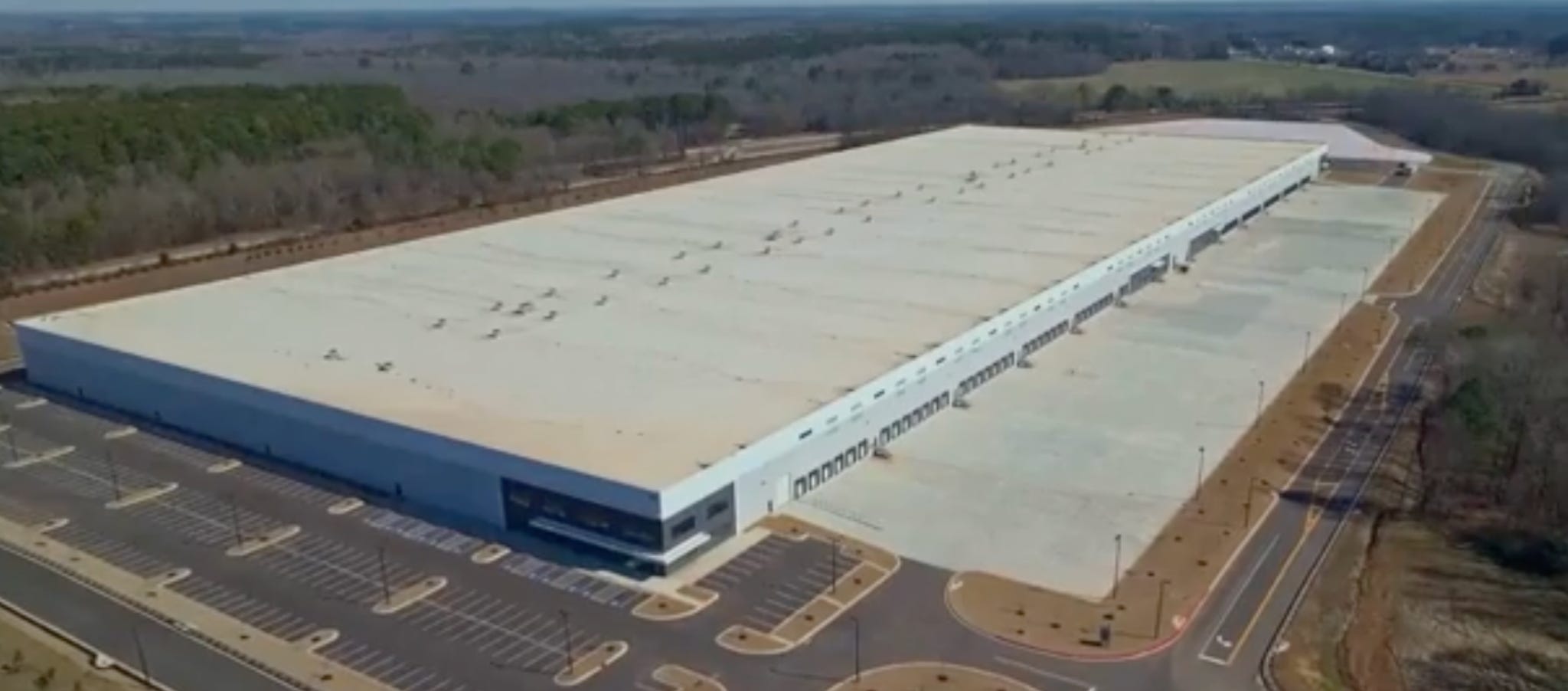
The other is a 418,000-square-foot e-commerce warehouse in Surprise, Arizona, purchased for $70 million in cash without notifying the city council. It will hold 1,500 detained people.
The community only learned about it when construction crews arrived. Both are used or will be used to hold human beings.
Neither was designed for human beings.
The Two Templates
The administration is building detention infrastructure faster than at any point in American history. Two models dominate: the military base and the warehouse.
The military base model: Use existing Department of Defense facilities — Fort Bliss, Guantanamo Bay, Camp Atterbury, McGuire-Dix — to house detainees under military jurisdiction. Benefits: avoids state and local oversight, complicates legal access, provides existing security infrastructure. Drawbacks: limited by base capacity, requires Pentagon cooperation.
The warehouse model: Purchase industrial properties — former e-commerce distribution centers, logistics hubs, manufacturing plants — and convert them into detention facilities. Benefits: speed (months instead of years), scalability (hundreds of thousands of square feet available), federal preemption (bypasses local zoning). Drawbacks: facilities aren’t designed for human habitation, conversion costs are enormous.
Both models share a common feature: they exist outside normal oversight structures.
Camp East Montana: The Tent City
Camp East Montana sits on Fort Bliss Army base, 60 acres of Chihuahuan Desert near El Paso. It is the largest immigration detention facility in the United States.
The contract: $1.2 billion, awarded to Acquisition Logistics LLC — a company based in Henrico County, Virginia and registered at a residential address. Before this contract, the company’s largest federal award was $16 million. They had no prior experience operating detention facilities. The Pentagon refused to release the contract or explain why Acquisition Logistics was selected over a dozen other bidders.
The capacity: Currently holding approximately 3,000 people. Designed for 5,000. There are plans to expand to 8,500.
The conditions: In its first 50 days, ICE’s own detention oversight unit found more than 60 federal standards violated — medical care, food quality, sanitation, access to counsel, or use of force policies. Armed guards were given no instructions about which situations would justify lethal force or what inspectors called “a serious vulnerability.”
A coalition of human rights organizations documented:
Beatings by masked officers
Sexual abuse during searches
Insulin denied to diabetics
Broken bones left untreated
Rotten food, chronic hunger
Coerced deportations — detainees beaten, then bused to the Mexican border
Solitary confinement for weeks
On December 8, 2025, eight organizations sent ICE a letter containing 45 detainee interviews and 16 sworn declarations. Their conclusion: additional deaths were imminent if the facility continued operating.
Two more men died.
What detainees describe: Isaac, a detainee interviewed by human rights investigators, said Camp East Montana “seems designed to wear you down.” He reported going multiple weeks without being allowed outside. A detained teenager testified that guards beat him, broke his front tooth by slamming him to the ground, and — while he was restrained — “grabbed and crushed his testicles” while another officer “forced his fingers deep into my ears.”
The historical echo: During World War II, Fort Bliss held first-generation Japanese immigrants — the Issei — classified as “enemy aliens” under the Alien Enemies Act. At least 113 were shipped through Fort Bliss before being transferred to other internment facilities. The Japanese American Citizens League condemned the current facility as “dishonoring” that history.
The same ground. Different targets. Same logic.
The Warehouse Initiative
Traditional detention center construction takes years. Environmental assessments, community input, architectural review and contractor selection must all take place. The administration didn’t have years. They just have arrest quotas: 3,000 detainees per day.
So they bought warehouses.
The “Warehouse Initiative” involves approximately 23 commercial properties being converted to detention facilities. The model prioritizes speed over everything else.
Confirmed Purchases
El Paso, TX (Clint): $122.8M — 3 warehouses, 63 acres — 8,500 beds
Schuylkill County, PA: $119.5M — 1.3M sq ft (former Big Lots) — ~7,500 beds
Hagerstown, MD: $102.4M — 825,000+ sq ft — ~1,500 beds
Surprise, AZ: $70M — 418,000 sq ft — ~1,500 beds
Berks County, PA: $87M — 518,000 sq ft — ~1,500 beds
Additional proposed locations include sites in Texas, Georgia, Mississippi, Florida, New Jersey, New York, Indiana, Louisiana, Michigan, and New Hampshire.
The legal mechanism: The federal government purchases these properties outright, allowing it to bypass state and local zoning laws. In Maryland, DHS purchased a warehouse specifically to circumvent the state’s Dignity Not Detention Act, which prohibited new ICE detention contracts with private operators.
Federal preemption means local communities have no legal recourse. When Surprise, Arizona, passed a five-year ban on detention facilities, it was unenforceable. Federal law supersedes.
The Economics
The Merrimack, New Hampshire, facility illustrates the conversion costs: $158 million to convert a 217,000-square-foot warehouse into a 500-bed facility. That’s $316,000 per bed.
Why is it so expensive? EPA documents describe the building as a “vacant shell.” To hold human beings, it needs:
Water and sewer infrastructure for hundreds of people
Dormitory construction
Courtroom spaces
Medical suites
Security systems
Kitchen facilities
Warehouses are designed to move products. They’re not designed to sustain human life. The conversion cost reflects the gap.
But it’s fast. The Surprise facility went from purchase to construction in months. Traditional detention construction takes years.
Speed serves quotas. Quotas require infrastructure. Infrastructure requires speed.
The Giga-Jails
The facilities planned for Socorro/Clint, Texas; Social Circle, Georgia; and Byhalia, Mississippi represent something new: detention at world scale.
Each is designed to hold 8,500 people.
If completed, these would be among the largest jails on earth. For comparison:
Los Angeles County Jail (largest in the U.S.): ~12,000
Rikers Island: ~6,000
Cook County Jail: ~5,500
Three facilities approaching the scale of the largest county jail system in the country — each.
The hub-and-spoke model: Detainees spend 3-7 days at local processing sites, then transport to these massive holding centers for approximately 60 days pending deportation.
Sixty days is the theory.
But in February 2026, the 5th Circuit Court of Appeals affirmed the administration’s authority to detain “unadmitted” immigrants indefinitely without bond hearings (Case No. 25-20496). The facilities aren’t designed for processing. They’re designed for capacity.
The trajectory: Internal ICE projections suggest capacity could exceed 135,000 beds by 2029. The entire federal prison system holds approximately 155,000 people.
The Facility Explosion
Between January 2025 and February 2026, the number of active ICE facilities approximately doubled — from roughly 104 facilities to over 212.
That’s a 91% increase in 13 months, according to the Vera Institute.
Major facilities — those holding over 1,000 people — nearly doubled from 11 to 20.
Total facilities: ~104 → 212+ (+91%)
Major facilities (1,000+): 11 → 20 (+82%)
Detention population: ~39,000 → ~73,000 (+87%)
Authorized capacity: 41,500 → 70,000+ (+69%)
The warehouse initiative. The military bases. The giga-jails. The “soft-sided” tent cities. County jails converted to federal holding. Private prisons expanding capacity. Hotels repurposed for detention.
All feeding a system designed for permanence.
The private prison industry is profiting accordingly. GEO Group reported $254 million in profit for 2025 — a 700% increase over 2024 — driven by new ICE contracts. CoreCivic’s profits rose 70%. Combined, the two companies opened nine new detention facilities and secured contracts for over 13,000 additional beds. Both expect 2026 to be even more lucrative.
Military Base Detention
Beyond Fort Bliss, DOD has authorized immigration detention at multiple military installations:
Camp East Montana (Fort Bliss, TX): Operational — 5,000 beds
Guantanamo Bay (Cuba): Operational — 500 current, 30,000 goal
Camp Atterbury (Indiana): Approved — up to 1,000
McGuire-Dix-Lakehurst (New Jersey): Approved — up to 3,000
Fort Snelling (Minneapolis): Operational — processing center
Buckley Space Force Base (Colorado): Staging — processing
Additional bases under exploration include sites in New York, Utah, California, Oregon, Washington, Wyoming, and Minnesota.
Why military bases?
On military property:
State and local oversight is limited
The county medical examiner’s jurisdiction is questionable
Military police, military hospitals, military rules
Congressional oversight is complicated — and actively obstructed
Civilian access requires military permission
In January 2026, after a federal court ruled that members of Congress have the legal right to make unannounced oversight visits to ICE facilities, DHS Secretary Kristi Noem secretly reinstated access restrictions through an undisclosed memorandum. Members of Congress were denied entry to a Minnesota facility despite presenting a valid court order.
When the El Paso County Medical Examiner ruled Geraldo Lunas Campos’s death at Camp East Montana a homicide, ICE sent the next body to William Beaumont Army Medical Center — a DOD facility that doesn’t release autopsy reports to the public.
The military jurisdiction wasn’t incidental. It was the solution to the problem of accountability.
Community Response
Communities are fighting back — and losing.
Surprise, Arizona: The city council passed a five-year ban on detention facilities after learning the DHS had purchased a warehouse without notification. The ban is legally unenforceable under federal preemption. Construction continues.
Upper Bern Township, Pennsylvania: Community protests against the Schuylkill County warehouse conversion. DHS purchased the former Big Lots distribution center for $119.5 million. Local opposition has no legal mechanism to stop construction.
Merrimack, New Hampshire: EPA documents reveal the facility’s wastewater capacity concerns. Community members raised health and environmental objections. The facility proceeds.
Maryland statewide: The state passed the Dignity Not Detention Act prohibiting new ICE detention contracts with private operators. The DHS responded by purchasing a warehouse outright, bypassing the law entirely.
Federal preemption means local democratic processes are irrelevant. The facilities are built regardless of community opposition.
What the Space Tells You
The confirmed warehouse purchases alone total over 4.1 million square feet of detention space — and that’s only six of 23 planned facilities.
At federal minimum standards, each detainee is entitled to 57 square feet of living space. At that standard, 4.1 million square feet holds 72,000 people.
But Camp East Montana and other facilities consistently violate space standards. Private prisons routinely pack detainees into 12 square feet per person — roughly the size of a standard mattress. At that density, the same 4.1 million square feet holds 342,000 people.
That’s just the warehouses with confirmed square footage. The full program envisions 23 facilities with a combined capacity approaching 100,000 beds. Add the military bases, the private prison expansions, and the county jail contracts, and the authorized detention capacity is projected to reach 135,000 beds by 2029 — approaching the entire federal prison system’s 155,000.
The gap between 57 square feet and 12 square feet is the gap between what the law requires and what the system actually does. The infrastructure already purchased can hold far more people than the government claims — at the density private prisons already use.
The Design
The tent cities and warehouses share a design philosophy: they exist outside of normal institutional structures.
Traditional detention: Purpose-built facilities with professional corrections staff, established oversight mechanisms, documented procedures, and civilian jurisdiction.
The new infrastructure: Converted industrial spaces, inexperienced contractors, military jurisdiction, no independent inspection, and procedures invented on the fly.
A facility that’s never held people before has no institutional memory of how detention should work. A contractor with no corrections experience has no professional norms to violate. A military base has no civilian oversight to circumvent.
The infrastructure is designed to produce suffering and hide it. The tent cities and warehouses are where the system stores people it doesn’t want found.
The Question
Geraldo Lunas Campos died in a tent city on a military base. Victor Manuel Diaz died eight days after transfer from Minneapolis to the same facility. Francisco Gaspar-Andrés died of liver failure that, properly treated, doesn’t kill 48-year-olds.
Three deaths within six weeks. One ruled a homicide. One autopsy sent to a military hospital. One whose care was documented as inadequate.
The facility is still open. The expansion continues. The giga-jails are being designed. The warehouses are being purchased.
Andrea Pitzer, the author of One Long Night: A Global History of Concentration Camps, traces the idea of mass civilian detention without trial from its beginnings, through Auschwitz and beyond She identifies concentration camps as facilities where civilian populations are held without trial — selected based on political, religious, or ethnic identity rather than individual conduct. Such systems, she has written, depend on public indifference.
The tent cities and warehouses hold people indefinitely without trial. They’re selected based on national origin. They operate beyond normal oversight. They have documented deaths ruled a homicide with no accountability.
The question isn’t what to call them.
The question is what happens when they’re full — and the quotas keep coming.
Series: After the Arrest
This is Part 3 of a 7-part series tracing what happens after ICE operations disappear from the cameras.
Autopsy Shopping — One came back homicide. The next body went somewhere else.
1,500 Miles in 24 Hours — The transfer system that turns an arrest into a disappearance
The Tent City and the Warehouse ← You are here
The $165 Billion Machine — How Congress cut student loans to fund the largest law enforcement expansion in history
The Closed Loop — One company monitors, hunts, and detains. Its executives run ICE.
The Darkness — The system wasn’t designed to fail oversight. It was designed to exist without it.
Making It Visible — The journalists, whistleblowers, and communities forcing the system into the light
Sources
Facility Documentation
Washington Post: “ICE Warehouse Expansion” (February 2026)
Commercial Observer: “DHS Real Estate Expansion”
WOLA: “Detention Warehouses Update” (February 2026)
Eyes on ICE: “The Warehouse Strategy”
Eyes on ICE: “The $1.3 Billion Shell Game”
El Paso Matters: “DHS buys El Paso warehouses for $123 million”
CBS Philadelphia: “ICE buys warehouse in Berks County”
Fort Bliss / Camp East Montana
El Paso Matters: “Third man dies in ICE custody”
NBC News: “ICE detainee’s death ruled a homicide”
ACLU: “Human Rights Groups Urge ICE to End Immigration Detention at Fort Bliss”
Human Rights Watch: “US: Close Fort Bliss Immigration Detention Site”
Texas Tribune: “ACLU reports physical abuse of migrants held at Fort Bliss”
Richmonder: “This Tuckahoe home won a $1.26 billion contract”
Historical
Densho Encyclopedia: “Fort Bliss (detention facility)”
JACL: “New ICE Detention Center at Fort Bliss Dishonors Japanese American History”
NBC News: “Japanese American groups blast use of Fort Bliss, former internment camp site”
Ireizō: Database documenting 113 Issei shipped through Fort Bliss
Community Response
California Globe: Surprise, AZ warehouse reporting
EPA: Merrimack facility wastewater documents
Maryland General Assembly: Dignity Not Detention Act
Legal / Oversight
5th Circuit Court of Appeals: Case No. 25-20496 (indefinite detention ruling, February 2026)
Sahan Journal: “Federal ruling allows immigrants to be held indefinitely”
Democracy Forward: “Court Orders DHS to Restore Congressional Oversight”
Private Prisons
Common Dreams: “GEO Group Reports Record $254 Million Profit”
The Intercept: “ICE’s Private Prison Contractors”
Facility Trends
Vera Institute: “ICE Detention Trends”
American Immigration Council: “Immigration Detention Expansion in Trump’s Second Term”
Analysis
Andrea Pitzer: Concentration camp definition
Jenn Budd: “Call Them Concentration Camps”
For the series documenting how this enforcement apparatus was built, see The Gamergate Army Gets Badges and Guns.
There should be absolutely no doubt that America is building one of the largest concentration camp systems in the world, if not the largest. Because in America we supersize everything don't you know? Anyone who doesn't think the next step will be death camps is delusional or unfamiliar with the Holocaust.
Excellent piece. Sharing with my subscribers tomorrow.